A distinct verbal world
Language that feels assured, inviting, and collective—strong enough to carry a movement without becoming institutional.
 praizenseStart a project
 Women-led technology movement
Turning a bold point of view into a digital place women can enter and shape.
01 / The brief
The movement needed enough emotional force to feel consequential, enough clarity to explain its purpose, and enough openness to let many women see themselves inside it. It also had to hold a future ecosystem of ideas, products, and voices—not just launch a campaign.
02 / The thinking
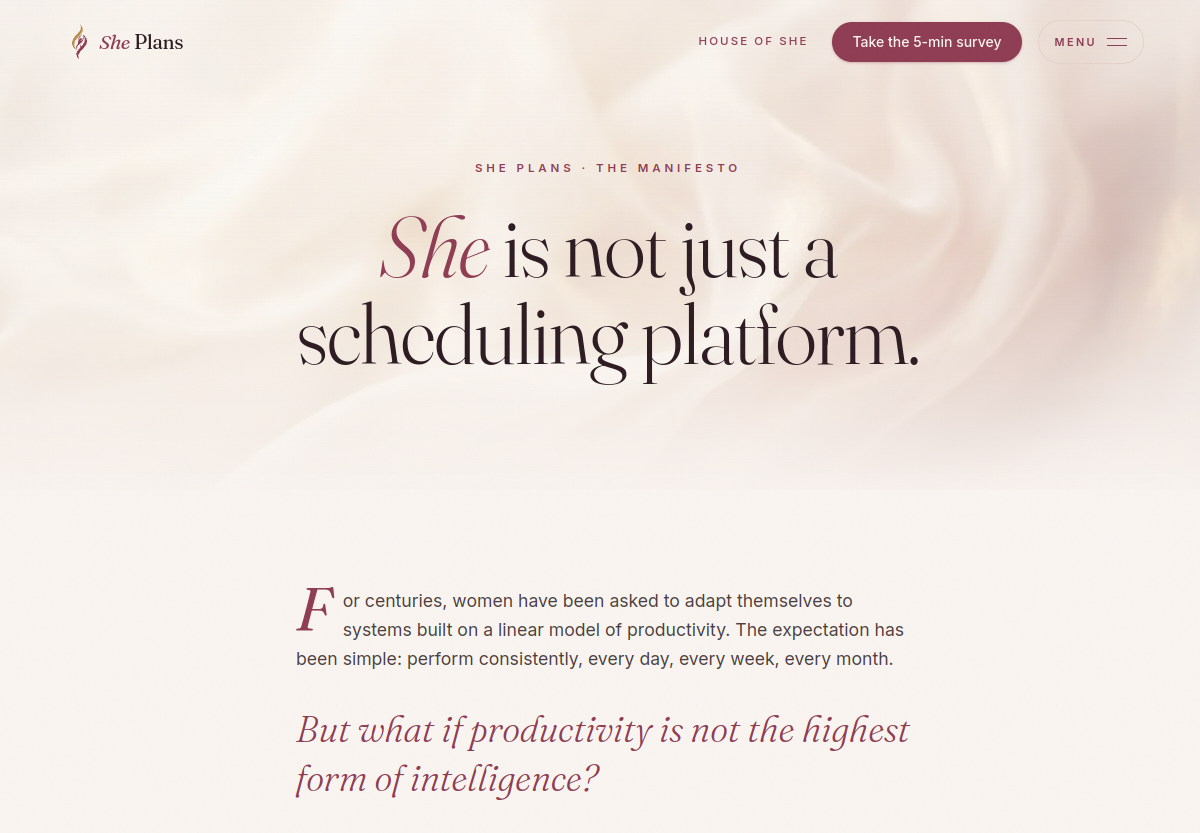
We used the spatial idea of a house to organize both story and interaction. Visitors cross a threshold, encounter the philosophy room by room, read the manifesto, and are invited to add their own voice. Cinematic imagery and editorial typography create atmosphere; direct language keeps the experience legible.
03 / What this enables
The site gives House of She a recognisable symbolic home while making contribution part of the experience itself. The visual system can stretch from long-form thought to community stories and future product launches without losing its character.
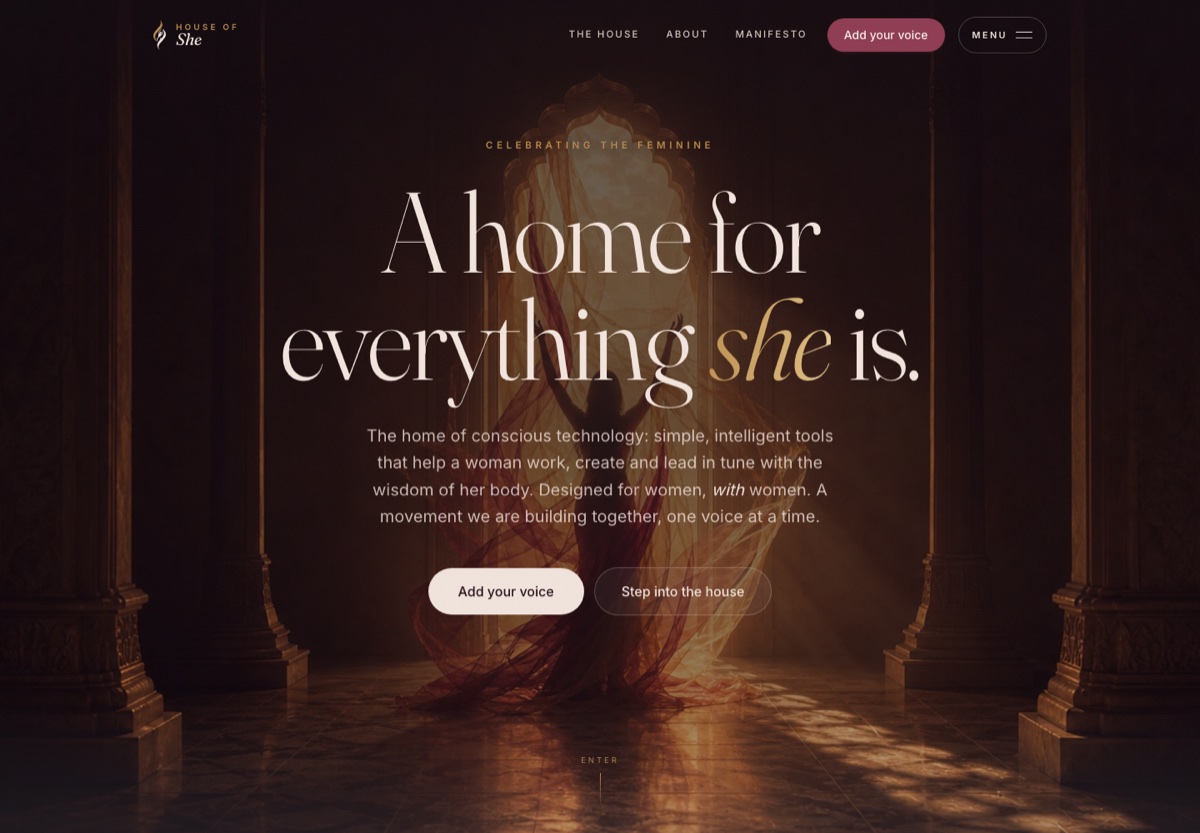
Current live visual system
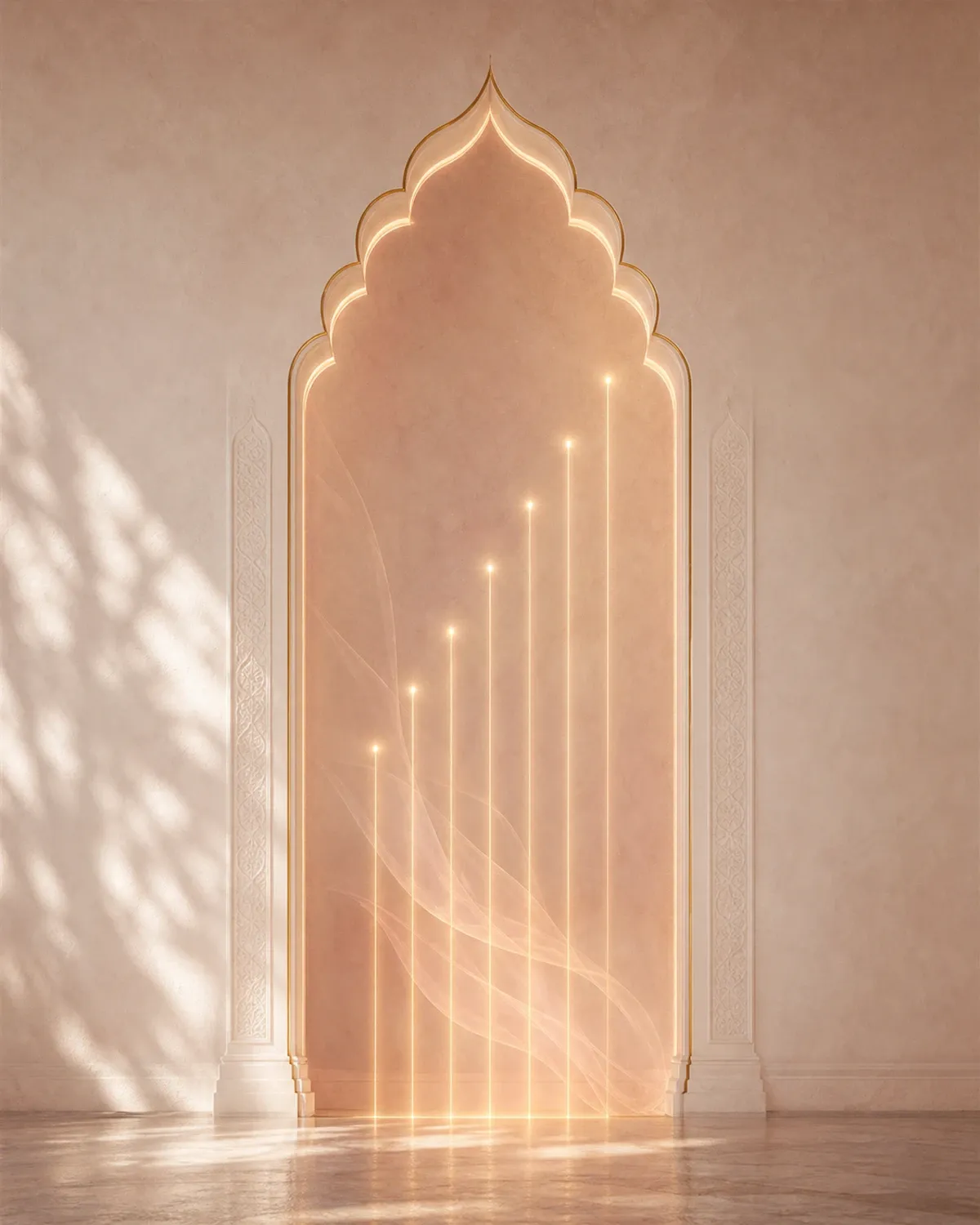
A closer view of the imagery and experience language currently published across House of She.

Experience architecture
Instead of presenting a stack of sections, the experience behaves like a sequence of rooms—each with a distinct role in the narrative.
An emotional invitation into the house
Why women must shape the technology they use
A shared language for the movement
A clear way to participate and be heard
Participation model
The audience is treated as a co-author. Contribution is framed as the beginning of the movement, not a secondary mailing-list action.
What we shaped
Language that feels assured, inviting, and collective—strong enough to carry a movement without becoming institutional.
A deep ember-and-rose palette, luminous imagery, and editorial type that make the experience feel ceremonial rather than promotional.
A contribution journey that turns agreement into action and gives the community a visible role in shaping what comes next.
The client experience
The collaboration had to protect the ambition of the idea while continually testing whether a visitor could understand where she was, what the house believed, and how she could participate.
We surfaced the emotional and cultural territory first, making space for nuance before reducing the movement to a conventional positioning statement.
The client and studio used the idea of a house to make decisions about sequence, language, visual atmosphere, and the role of each part of the experience.
Reviews considered both registers together: whether a moment felt distinctive and whether it still told visitors exactly what they could do next.
The participation journey was treated as core product behaviour so the movement could be shaped by women’s voices rather than presented to them as finished.
Have a complex idea of your own?